Many people ask, is pneumonia contagious? Pneumonia is a serious respiratory condition that causes inflammation in the air sacs of one or both lungs. It can range from mild to severe, depending on the cause, age, and overall health of the patient. Therefore, understanding whether pneumonia spreads from person to person is important for protecting yourself and your family.
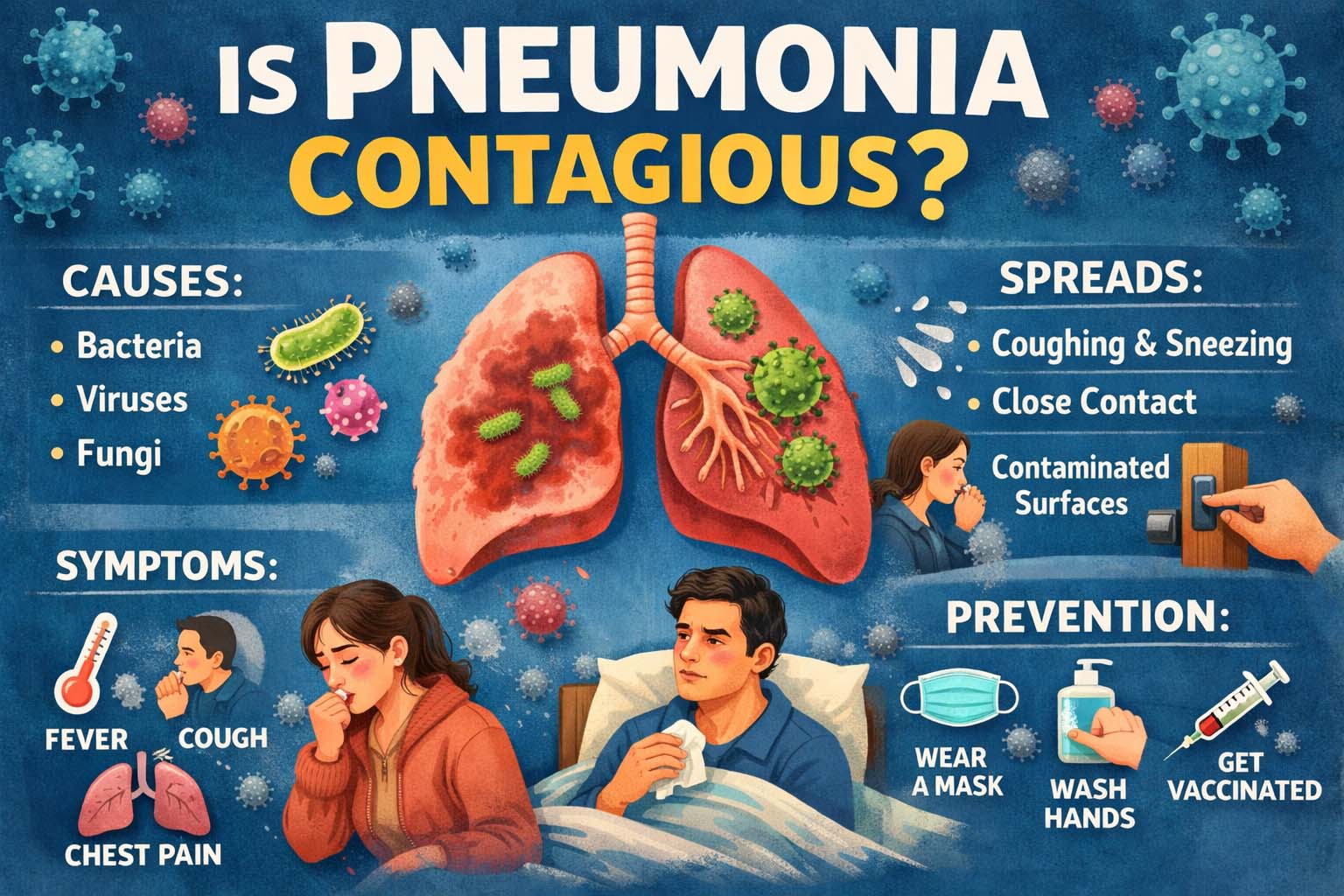
The short answer is that some types of pneumonia are contagious, while others are not. Pneumonia can be caused by bacteria, viruses, fungi, or even aspiration from inhaling food or liquid. As a result, each type has a different risk of spreading.
In this article, we will explain how pneumonia spreads, common symptoms, treatment options, and prevention methods so you can better understand this common illness.
What Is Pneumonia?
Pneumonia is an infection that inflames the tiny air sacs in the lungs, known as alveoli. These air sacs may fill with fluid or pus, making breathing difficult. Pneumonia often develops after a cold, flu, or other respiratory infection.
Symptoms may include:
- Cough with mucus
- Fever and chills
- Chest pain when breathing
- Shortness of breath
- Fatigue
- Rapid breathing
- Loss of appetite
Some people recover quickly, while others may need hospitalization.
Is Pneumonia Contagious?
A common concern is is pneumonia contagious. The answer depends on the cause of the infection.
Contagious Types of Pneumonia
Pneumonia caused by bacteria or viruses can often spread from person to person through:
- Coughing
- Sneezing
- Touching contaminated surfaces
- Close contact with infected individuals
When germs enter another person’s respiratory system, they may cause infection.
Non-Contagious Types
Some forms of pneumonia are not contagious, such as:
- Fungal pneumonia from environmental spores
- Aspiration pneumonia caused by inhaling food, saliva, or vomit
- Chemical pneumonia caused by irritants
Therefore, these types do not usually spread between people.
Is Walking Pneumonia Contagious?
Many people wonder, is walking. Walking pneumonia is a milder form of pneumonia usually caused by Mycoplasma pneumoniae, a type of bacteria.
Yes, walking pneumonia is contagious. It spreads through respiratory droplets when an infected person coughs or sneezes. However, it spreads more slowly than common colds or flu.
Walking pneumonia is common in:
- Schools
- Dormitories
- Offices
- Military barracks
- Households
Symptoms may be mild, including:
- Dry cough
- Fatigue
- Mild fever
- Sore throat
- Headache
Because symptoms are mild, many people continue daily activities and unknowingly spread the infection.
Is Bacterial Pneumonia Contagious?
Another frequent question is is bacterial pneumonia contagious. Yes, bacterial pneumonia can be contagious depending on the bacteria involved.
Common bacteria causing pneumonia include:
- Streptococcus pneumoniae
- Haemophilus influenzae
- Mycoplasma pneumoniae
- Legionella pneumophila
Bacterial pneumonia spreads through respiratory droplets or contact with contaminated surfaces.
However, not everyone exposed becomes sick. Risk depends on:
- Age
- Immune system strength
- Existing lung disease
- Smoking history
- Vaccination status
In particular, older adults and young children are more vulnerable.
How Long Is Pneumonia Contagious?
People often ask, how long is pneumonia contagious?
Viral Pneumonia
Viral pneumonia may be contagious a few days before symptoms start and for several days after symptoms appear.
Bacterial Pneumonia
For bacterial pneumonia, many people become less after taking antibiotics for 24 to 48 hours, if symptoms improve.
Walking Pneumonia
Walking pneumonia may remain contagious for longer because symptoms are mild and treatment may be delayed.
Important Note
Even if no longer contagious, coughing and fatigue may continue for weeks while lungs heal.
How Easily Can It Spread?
Some users search phrases like how contagious is pneumoniape, often meaning how contagious pneumonia is overall. The level of contagiousness depends entirely on the underlying germ.
Highly Contagious Situations
- Crowded indoor spaces
- Poor ventilation
- Close family contact
- Sharing drinks or utensils
- Frequent coughing without covering mouth
Lower-Risk Situations
- Proper treatment started
- Good hand hygiene
- Wearing masks when sick
- Avoiding close contact
- Clean surfaces and ventilation
Overall, pneumonia can be moderately contagious, but it is not always as easily spread as flu or the common cold.
Who Is at Higher Risk?
Some people are more likely to develop pneumonia after exposure.
High-Risk Groups
- Adults over 65
- Children under 5
- Smokers
- People with asthma or COPD
- Diabetics
- Cancer patients
- Individuals with weak immune systems
- People recovering from flu or COVID-19
Therefore, these individuals should seek medical advice quickly if symptoms appear.
Symptoms Across Age Groups
Symptoms vary depending on age and cause. Watch for:
Adults
- Fever
- Chills
- Productive cough
- Chest discomfort
- Shortness of breath
- Weakness
Children
- Fast breathing
- Fever
- Poor feeding
- Irritability
- Low energy
Seniors
Older adults may show confusion, weakness, or low body temperature rather than fever.
Some respiratory infections may also cause noisy breathing. People experiencing this symptom can learn how to stop wheezing while seeking appropriate medical care.
How Doctors Confirm the Infection
Doctors use several tools to confirm pneumonia:
- Physical exam with stethoscope
- Chest X-ray
- Blood tests
- Oxygen level check
- Sputum testing
- CT scan in severe cases
Ultimately, early diagnosis helps prevent complications.
Treatment Options
Treatment depends on the cause.
Bacterial Pneumonia
- Antibiotics
- Rest
- Fluids
- Fever reducers
Viral Pneumonia
- Rest
- Hydration
- Antiviral medicine in some cases
- Symptom relief
Severe Cases
Hospital treatment may include:
- Oxygen therapy
- IV fluids
- Stronger medications
- Breathing support
Always complete prescribed medication.
How to Prevent Pneumonia Spread
If you are concerned about is pneumonia contagious, prevention is key.
Best Prevention Tips
- Wash hands often
- Cover coughs and sneezes
- Stay home when sick
- Avoid smoking
- Clean frequently touched surfaces
- Get flu vaccines
- Get pneumococcal vaccines if recommended
- Maintain strong immunity with sleep and nutrition
Additionally, keeping indoor air comfortable may help reduce dryness, and readers can explore the benefits of humidifier use.
Overall, these steps reduce risk significantly.
When to See a Doctor
Seek urgent care if you have:
- Trouble breathing
- High fever
- Blue lips
- Chest pain
- Confusion
- Persistent worsening cough
- Symptoms lasting more than a few days
Early treatment can prevent serious complications. Severe pneumonia can sometimes lead to oxygen-related breathing failure, which healthcare professionals may document using acute hypoxic respiratory failure ICD 10.
Can Pneumonia Return?
Yes, pneumonia can happen more than once. Recurrent pneumonia may indicate:
- Weak immune system
- Chronic lung disease
- Smoking damage
- Poor swallowing function
- Untreated medical conditions
Therefore, if pneumonia returns often, further testing may be needed.
Recovery Time
Recovery depends on severity.
Mild Cases
1 to 3 weeks
Moderate Cases
Several weeks
Severe Cases
1 month or more, especially in older adults
Even after the infection clears, tiredness and cough can continue.
Conclusion
So, is pneumonia contagious? Some forms are contagious, especially bacterial and viral pneumonia, while others are not. Understanding the cause helps determine the risk of spreading it to others. Questions such as is walking pneumonia contagious, is bacterial pneumonia contagious, and how long is pneumonia contagious all depend on the type of infection and treatment status.
The best protection includes hygiene, vaccination, early treatment, and avoiding close contact when sick. If you suspect pneumonia, consult a healthcare professional promptly. Ultimately, early diagnosis and proper care can lead to faster recovery and better outcomes.